Scripture Reading: Matthew 2:1-12
Now after Jesus was born in Bethlehem of Judea in the days of Herod the king, behold, wise men from the east came to Jerusalem, saying, “Where is he who has been born king of the Jews? For we saw his star when it rose and have come to worship him.” When Herod the king heard this, he was troubled, and all Jerusalem with him; and assembling all the chief priests and scribes of the people, he inquired of them where the Christ was to be born. They told him, “In Bethlehem of Judea, for so it is written by the prophet:
“‘And you, O Bethlehem, in the land of Judah,
are by no means least among the rulers of Judah;
for from you shall come a ruler
who will shepherd my people Israel.’”
Then Herod summoned the wise men secretly and ascertained from them what time the star had appeared. And he sent them to Bethlehem, saying, “Go and search diligently for the child, and when you have found him, bring me word, that I too may come and worship him.” After listening to the king, they went on their way. And behold, the star that they had seen when it rose went before them until it came to rest over the place where the child was. When they saw the star, they rejoiced exceedingly with great joy. And going into the house, they saw the child with Mary his mother, and they fell down and worshiped him. Then, opening their treasures, they offered him gifts, gold and frankincense and myrrh. And being warned in a dream not to return to Herod, they departed to their own country by another way.
The True King
An Epiphany Reflection on Authority, Faith, and Christ's Kingdom
Pastor James Huenink
Grace, mercy and peace to you from God, our Father and from our Lord and Savior, Jesus Christ. Amen.
Tonight, we're celebrating the story of the wise men—men who came from a far eastern country, though we're not sure exactly where. They were traveling, we're not sure exactly how far, with a group of people whose size we cannot determine. And they come to King Herod in the city of Jerusalem, finding the place where they think the king should be, and they ask the most dangerous question you could ask King Herod: "Where is he who is born king of the Jews?"
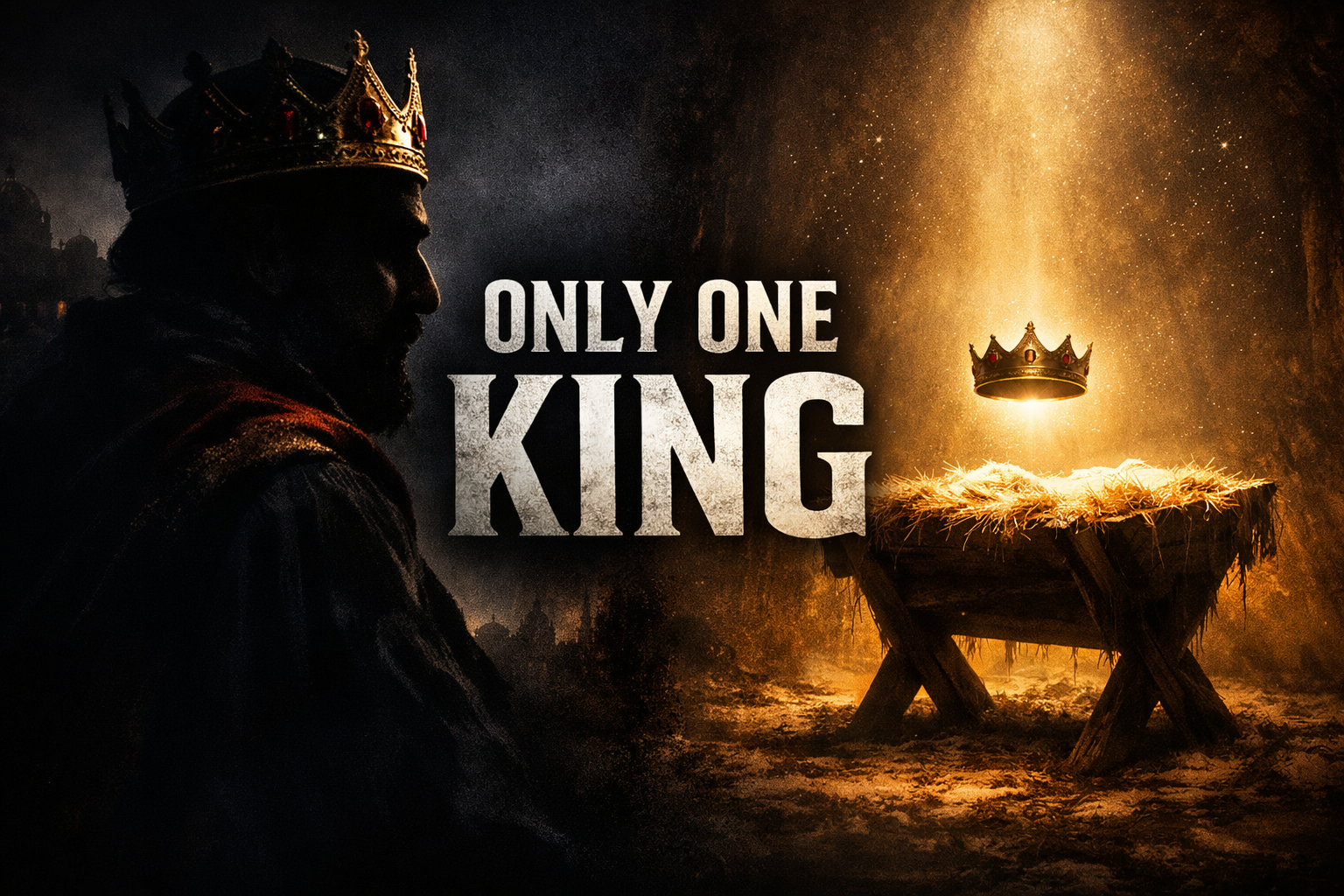
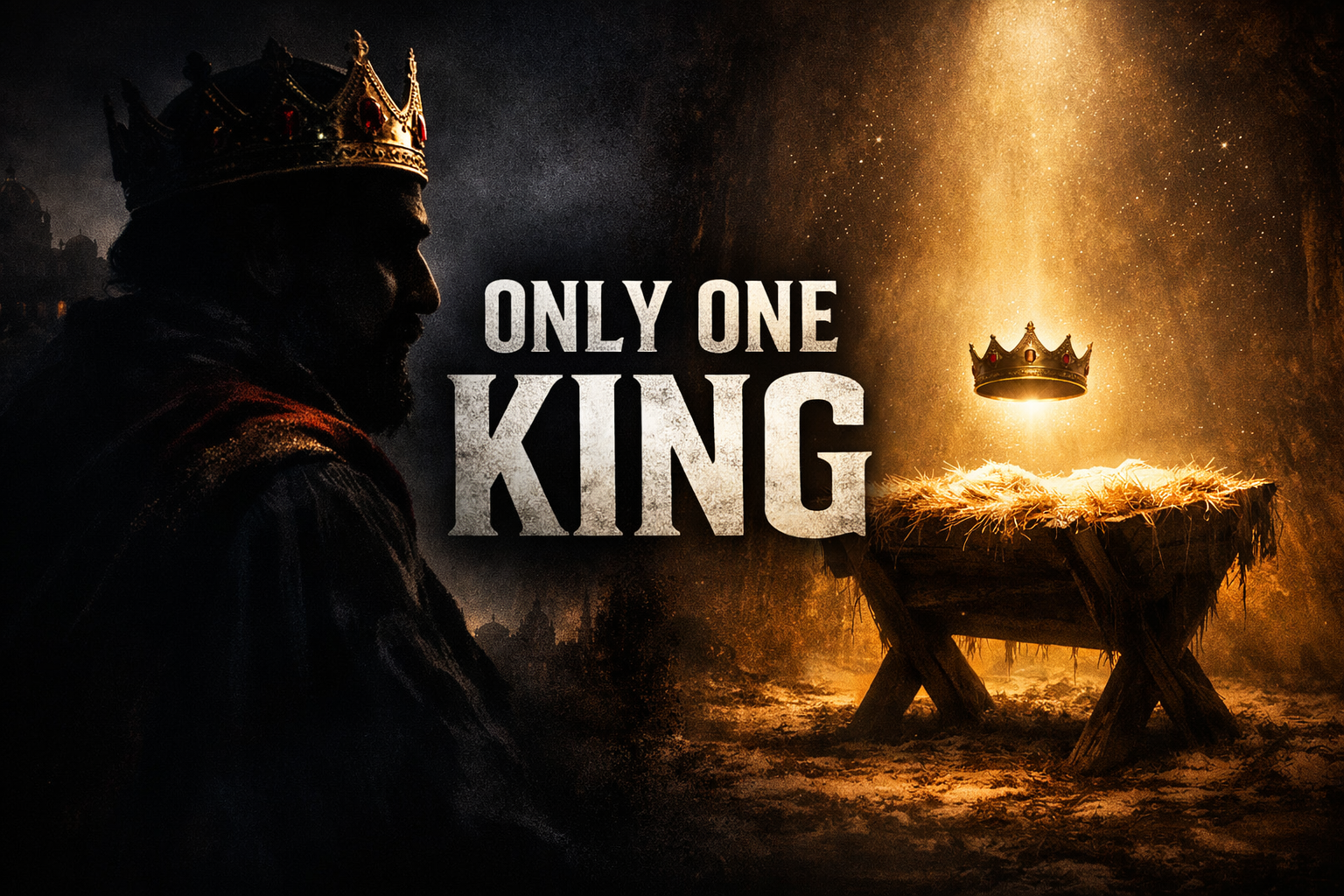
Herod had no idea what they were talking about, and he hated competition. He hated it so much that he had a tendency to kill off the competition, including his own family, whether they were trying to compete with him or not. The wise men have no idea what's going on and fall into a little bit of his trap. But the key here is that there is a competition between one king and the real King—between Herod, who is king in Jerusalem, and Jesus, who is born King not just of the Jews, but of the Gentiles who have come to see him in Bethlehem, represented by these wise men who bring amazing gifts fit for a king, even though he isn't born in a palace with all the trappings that you'd expect.
Tonight, I'd like to focus on this competition that happens, both as King Herod sees Jesus as a threat, and also how other authorities will see Jesus as a threat—something to either fight against or manage for their own advantage.
King Herod saw Jesus as a threat because all he could understand was the earthly power that kings could wield. Herod was not in a great position. He was not a Jewish person by birth. He was not related to the great heroes of the Maccabean revolt. He was kind of an outsider put in place by the Caesar in Rome to be King of the Jews, and yet he never felt secure. He knew his grip on power depended solely on the Romans who were there to support him and his ability to control the people he was ruling. And when this group of people come and ask him that fateful question, he feels threatened.
The real King, King Jesus, was someone who actually wasn't a threat to Herod at all. That's why he was born in a place like Bethlehem, not in a palace. It's why he never raised armies, why he never fought against the Roman Empire. Because he is a King whose kingdom is not of this world—a King of a people who are gathered by a promise, not by laws; a King who promises that on the other side of death, he will gather all his people together into the new age, a new kingdom, a kingdom that is on the other side of death in the resurrection.
Authorities have always seen this King Jesus as a threat, whether he is to them or not, because authority doesn't like split allegiances. No law, no king, no governor, no dictator wants anyone to think that they have authority somewhere else. That's why Herod was so nervous. He knew that a promise, any kind of faith, could distract the people around him from looking at him and seeing him as the true king. Jews had faith that God would send a messiah, someone who would lead them into this great kingdom that God had promised.
And Christians, we have a similar faith—not a kingdom that is of this earth, but a higher calling that when authority conflicts with God's commands, we listen to God and not men. And it was this conflict that led Jesus to a cross, after all, a conflict between what they accused him of—of being a rebel against Caesar—a misunderstanding of who Jesus was that ended him up on the cross. Jesus shows us that authority is his by his death and resurrection.
Herod's answer to the earthly conflict between faith and authority demanding allegiance was to kill them all. That's what happens after this story. Right after Matthew chapter two, which we read on the last Sunday, the wise men head off, and Herod sends his soldiers to try to kill poor Jesus. He is saved by a vision given to Joseph, his father, who carries them off to Egypt. And this is something that authorities have done over and over throughout the history of the world, to try to gather together the allegiance of Christians—they fought them, whether it's Roman persecutions way back in the day, or the greater persecutions of today in regimes all over the world, whether it's China, North Korea, India, or wherever. Authority often responds to Christianity with violence.
And our solution to that is simple. In fact, sometimes it's even easier, because when someone comes at you with a sword, it stiffens your back, doesn't it? Choose Jesus or die. I know what I'm supposed to do. We follow Jesus, who continued to do his ministry, who denied himself, took up his cross and died for us, and we do the same. And Christ's resurrection gives every Christian who faces this persecution a promise that when he returns, they will be raised to glory as the greatest among us, just as we too will rise when Christ returns.
Yet for most of us, it is not that kind of conflict between earthly authority and heavenly authority that we face. I don't think any of us have been chased by an angry King Herod or soldiers with spears. None of us have been sent into an arena to face lions. But what happens in our country is when the conflict between authority and Christ comes, the authority wants to co-opt us—to take our Christianity and make it about something else, something other than following our King and our Savior.
There's been a resurgence of talking about religion in the United States in the last few months, at least in my own podcast feeds. Different groups are doing different debates about the usefulness of religion or not. I listened to one by the Free Press not too long ago—they did a debate about whether religion is good for America or not. A different group called Open to Debate put out a debate that asked, "Could religion solve the loneliness crisis?" And on the surface, I think these sorts of questions sound good, don't they? People are talking about religion, and usually in America, that means Christianity. People would be better off if they all knew Jesus.
The problem is that whenever somebody out there in authority, or in the media, talks about religion, they talk about it as this useful fairy tale. And really what it's good for is solving loneliness, making our politics better. Christianity is only really good if it accomplishes some other goal—making us kinder, serving other people, making America great again, or liberating a marginalized people. What they want to do is turn us from following King Jesus to following some other aim.
You may agree with some of those aims. We who are gathered here are often split politically, but we have to remember that Jesus isn't on any side. He is here to bring resurrection from the dead. He is here to guide us through death into eternal life. And he isn't here for a team or a policy, but to bring about his kingdom on earth through the church, by gathering us together through his Word and Sacraments, to make us one people under our King. In Christ, we know that the true thing that matters is his kingdom that he brings and the promise that he will return and give us salvation on the last day.
So we have to be careful. The world wants to co-opt Christ, take him off his throne and make him serve some other end, whether it's nationalism or progressivism or whatever it is you think about. Churches and Christ—Christ is not a servant but the King. And so when presidents, politicians, or pundits mention Christianity or religion, ask yourself: Are they doing it to serve their ends or Christ's? His kingdom or theirs?
Because in the end, only one King will remain—the Savior who is currently seated at the right hand of the throne of God, who is watching over all things and guiding all of creation for the good of those who love him and are called according to his purpose. He is the only one who will remain when he comes back on the clouds with power and glory to give us life in his name.
Amen.
Find us on Youtube, Apple Podcasts, or Spotify.