Scripture Reading: Ephesians 4:1-6
I therefore, a prisoner for the Lord, urge you to walk in a manner worthy of the calling to which you have been called, with all humility and gentleness, with patience, bearing with one another in love, eager to maintain the unity of the Spirit in the bond of peace. There is one body and one Spirit—just as you were called to the one hope that belongs to your call— one Lord, one faith, one baptism, one God and Father of all, who is over all and through all and in all.
We Believe: An Introduction to the Nicene Creed
Ash Wednesday Sermon | Lenten Series on the Theology of the Nicene Creed
By Pastor James Huenink
Grace, mercy and peace to you from God our Father and from our Lord and Savior, Jesus Christ. Amen.
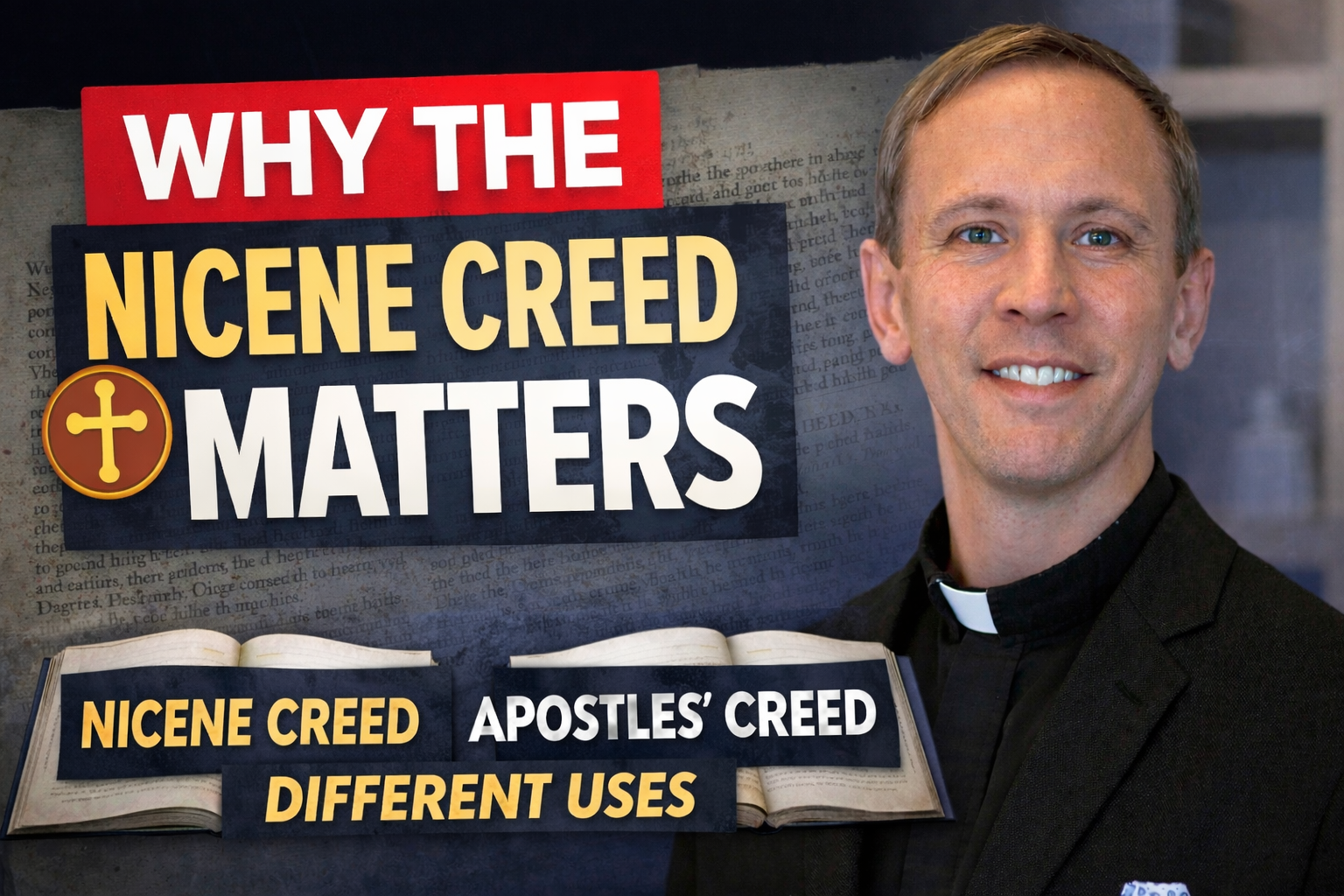
Tonight is Ash Wednesday, and in our Lenten season, we are going to be doing a series on the theology of the Nicene Creed. One of the reasons we're looking at the Nicene Creed is because our congregation has begun confessing this creed in our Sunday morning worship service, and people were asking, "Hey Pastor, why are we doing the Nicene Creed and not the Apostles' Creed?" I thought that sounds like a great thing to explore in Lent — so why not? We're going to talk about it.
Tonight, specifically, we're going to talk about why the Nicene Creed is so important, what it does, and introduce the history of the Nicene Creed — and why the church uses it on Sunday mornings. What makes this creed so important to Christians since it was created in 325 AD? So let's dive in.
The Council of Nicaea and the Arian Heresy
The Nicene Creed was created as part of the Council of Nicaea in 325 AD. The reason it happened was because there was a man named Arius. He was a priest who was going around teaching a new doctrine, and that doctrine was: Jesus is not truly God. He is the first created being — first and greatest — but not God.
The reason they were dealing with this problem is because the Greeks really liked things to make sense. They wanted everything to be logical, and so they asked: if God is one, how could He have a Son? That just doesn't seem to make sense. And so Arius read the Bible and came to the conclusion that Jesus is not actually divine — He is not a person of the Trinity, but just a creature, just like us.
His teaching began to spread. In fact, it became very, very popular, spreading throughout all the Roman Empire and throughout the church, and it was causing great division. So the Emperor Constantine said to the bishops, "Guys, figure this out. Division is not cool."
There was a council in 325 AD, and the bishops and priests gathered together, debated back and forth, and decided — as the Church has always known — that Arius was wrong. Our God is Father, Son, and Holy Spirit: three persons, one God.
How the Creed Came Together
What they then did was write the Nicene Creed. Now, it was shorter than the creed we know today. It had all of the pieces about Jesus, but when you got to the Holy Spirit, that part simply read: "And I believe in the Holy Spirit." Period.
Unsurprisingly, pretty soon people started saying, "Maybe the Holy Spirit isn't God. Maybe He's not really a person." And so they got together in another council — the Council of Constantinople — and added the portions where the Holy Spirit is mentioned. The Nicene Creed then came together in the form we now have it.
The key behind it was to help us understand that our God is Father, Son, and Holy Spirit — three persons and yet one God. They used all sorts of interesting and precise language, like "being of one substance with the Father, by whom all things were made," to communicate this. But in the end, it still comes down to that: Father, Son, Holy Spirit — three equal persons, and yet one God.
"We Believe" — A Pledge of Allegiance for the Church
This creed, since that day, has been a way of teaching God's people the faith that we all believe in. That is why I titled this sermon "We Believe" and not "I Believe."
If you go back to the very early days, when the Nicene Creed was first published, it began in Greek: "We believe" — not "I believe." The idea behind this is that the creed became a sort of pledge of allegiance for the Christian church. A marker that said: everything inside this is Christian; everything outside this is not. It reflected the unity that God wants within His holy Christian church.
If you look at the scriptures, unity is all over the place — especially in the text for today, Ephesians chapter four, where Saint Paul writes:
"Make every effort to keep the unity of the Spirit through the bond of peace. There is one body and one Spirit, just as you are called to one hope when you were called — one Lord, one faith, one baptism, one God and Father of all, who is over all and through all and in all." — Ephesians 4:3–6
What St. Paul is teaching us is that the Christian faith is not a collection of individuals. It is not a bunch of people who each have their own separate philosophies, who happen to gather around a leader who likes to talk a lot. It's a unity — one Lord, one baptism, one Spirit, one body, one God and Father who is over all, in all, and through all.
We are bound in this one faith by our Savior, Jesus Christ, whose death and resurrection brings us into this faith. His gift of the Holy Spirit is what makes us Christians, gathers us together into this one faith, and gives us the promise of eternal life. The Nicene Creed is a great summary of this gospel message preached throughout the Holy Scriptures — a summary of the promise we have in the Father, Son, and Holy Spirit.
The Creed Still Fights Heresy Today
The Nicene Creed has been confessed that way ever since, summarizing the faith we have in the Holy Scriptures around Father, Son, and Holy Spirit. And it still offers help and protection for us today as a summary of this faith, because it still fights against the very same heresies it fought against all the way back in 325 AD — because they are still everywhere.
These heresies are still taught today. The Jehovah's Witnesses, for example, are just as Arian as Arius himself, teaching that Jesus is just the first and greatest created being.
But it's even worse than that. A group called Ligonier Ministries puts out a survey of the Christian faith every two years. They list a whole bunch of historical heresies and see how many Christians agree or disagree with them — and the results are rather scary.
In the latest survey, they included this statement: "The Holy Spirit is a force, but is not a personal being." What that means is that the Holy Spirit is not a person with will, mind, and feeling — He is more like what Luke Skywalker does when he reaches out and moves a lightsaber with the Force. That is not the God who saves us. That is not the God we worship.
63% of Christians who attend church at least weekly believe that the Holy Spirit is a force and not a personal being. That's over half of all Christians who go to church every Sunday.
You know what would solve that? Confessing the Nicene Creed.
Here's another one from the survey: "Jesus was a great teacher, but He was not God." 47% of Christians who attend church agreed with that statement.
Every Sunday, Christians who confess the Nicene Creed gather together and say:
"We believe in one Lord, Jesus Christ, the Only Begotten Son of God, begotten of His Father before all worlds, God of God, Light of Light, very God of very God, begotten, not made, being of one substance with the Father, by whom all things were made."
A Simple Summary of Everything We Need to Know
The Nicene Creed is just an easy way to remember everything we need to know about our God. You don't have to memorize the entire scriptures or understand all the different complex arguments about why the Father, Son, and Holy Spirit are three persons and one God — we have a handy way of fighting heresy, and it only takes about a minute and a half to say.
This is why the creed has been so important throughout the years of the Christian church. It gives us a simple way to remember what we believe about our God — the God who saves us and gives us life — and makes sure that we're actually worshiping the true God of Holy Scripture. It helps us keep the unity of the faith that God calls us to.
In Jesus' name. Amen.
Find us on Youtube, Apple Podcasts, or Spotify.