💰 The Rich Man & Lazarus: What Jesus Really Teaches About Money and Compassion

💰 The Rich Man & Lazarus: What Jesus Really Teaches About Money and Compassion

What does the parable of the Rich Man and Lazarus really teach us about wealth, blessing, and eternal life? In this sermon, Pastor James Huenink explores Jesus’ powerful story from Luke 16, showing how God’s Word turns upside down our assumptions about money, success, and compassion.

Far from being a simple warning about riches, this parable challenges us to see our neighbors as people deeply loved by God—and calls us to use the gifts He’s given us for service, not selfishness. Pastor Huenink also connects this teaching to today’s struggles with prosperity thinking and how the Gospel of Jesus Christ frees us to live generously.

Money Is God’s Tool, Not Your Master

Money Is God’s Tool, Not Your Master

What is money really for? Jesus reminds us that money is never our master but God’s tool, given to us to serve others. In this sermon, Pastor James Huenink explores what Scripture teaches about wealth, stewardship, and trust:

  • Why everything we have belongs to God

  • How money fails when treated as an idol

  • How Christians use money in daily life and vocation

  • The freedom and forgiveness we have when we fail in stewardship

God doesn’t need your money—but your neighbor does. Learn how to see money the way Jesus teaches and use it for God’s purposes.

📖 Scripture: Luke 16:1–13
🙏 Sermon preached at First Lutheran Church, El Cajon

💡 The Shepherd Who Seeks the Lost | Luke 15 Sermon

💡 The Shepherd Who Seeks the Lost | Luke 15 Sermon

Have you ever felt lost—disoriented, panicked, unsure where to turn? Missing a flight may leave you stranded for a day, but being spiritually lost leaves us cut off from God. The good news is that we have a Shepherd who doesn’t wait for us to find Him—He comes seeking us.

In this sermon from First Lutheran Church, Pastor James Huenink unpacks God’s promise in Ezekiel 34, its fulfillment in Jesus Christ, and what it means for us today. Discover how the Good Shepherd relentlessly pursues His sheep, carries us when we fall, and rejoices when even one sinner is restored.

📖 Scripture: Ezekiel 34, John 10, Luke 15
✝️ Key message: You do not find God—He finds you.

Perpetua, The Martyrs & the Cost of Discipleship: Luke 14

Perpetua, The Martyrs & the Cost of Discipleship: Luke 14

Jesus said, “Whoever does not bear his own cross and come after me cannot be my disciple.” What does that mean for us today?

In this sermon, Pastor James Huenink of First Lutheran Church explores Jesus’ call to discipleship in Luke 14 and shares powerful stories of Christians who gave up everything to follow Christ:

  • Perpetua – a young mother in North Africa who refused to deny her faith

  • The Salzburg Lutherans – who left their homes, land, and livelihood rather than abandon the Gospel

  • The Malagasy Martyrs – believers in Madagascar who sang hymns as they faced death

  • And above all, Jesus Himself, who bore the cross for our salvation

Discover what it means to count the cost, carry the cross, and find life in Christ alone.

📖 Scripture: Luke 14:25–35

Stop Playing Status Games | Jesus on Humility and True Greatness

Stop Playing Status Games | Jesus on Humility and True Greatness

We live in a world obsessed with climbing the social ladder—whether at work, online, or even at church. But Jesus turns it all upside down: “Everyone who exalts himself will be humbled, and he who humbles himself will be exalted” (Luke 14:11).

In this sermon, Pastor James Huenink unpacks Jesus’ teaching at a feast, showing how our exhausting pursuit of status leads nowhere. Instead, we look to Christ, who humbled Himself all the way to the cross—and was exalted to the highest place. Through His death and resurrection, He calls us to a life not of self-promotion, but of service, love, and eternal hope.

📖 Key Text: Luke 14:1–14
✝️ Theme: True humility is not thinking less of yourself, but thinking of yourself less.
🙌 In Christ, the humble are lifted up.

Jesus Brings Division? What Christ Really Meant in Luke 12

Jesus Brings Division? What Christ Really Meant in Luke 12

When we think of Jesus, we often picture peace, healing, and unity. But in Luke 12, Jesus says something shocking: “Do you think I have come to bring peace on earth? No, I tell you, but rather division.”

What does this mean? Why would the Prince of Peace speak about dividing families, friends, and even the church? In this sermon, Pastor James Huenink unpacks the difficult reality of how the Gospel both unites us in Christ and separates us from the world.

The One Conspiracy Theory That’s Actually True (and It’s Not the Deep State)

The One Conspiracy Theory That’s Actually True (and It’s Not the Deep State)

From JFK and the moon landing to Big Tech, Big Ag, and the “deep state,” conspiracy theories are everywhere. But what if there really is a shadowy group running the world—just not the one you think? In this sermon, Pastor James looks at the false “progress” story behind our obsession with conspiracies, why utopian dreams always fail, and the one true conspiracy revealed in Scripture: the Father, Son, and Holy Spirit working all things for your good.

The Rich Man's Fatal Mistake: Why Jesus Said 'You Fool' (What Is Really Enough?

The Rich Man's Fatal Mistake: Why Jesus Said 'You Fool' (What Is Really Enough?

If you could have anything—a paid-off mortgage, perfect health, unlimited wealth, the perfect family, recognition for all your hard work—would it be enough? What if I told you that millions of people who have all of these things still lie awake at night feeling empty? There's something deeper going on here. Today we're tackling the question that determines everything: What is really enough? And the answer might surprise you—because it's not what the world is selling.

Mary, Martha, and the One Thing Needed: How to Find Rest in a Restless World

Mary, Martha, and the One Thing Needed: How to Find Rest in a Restless World

Are you busy, tired, or spiritually distracted? You're not alone. In this sermon, Pastor Roland Rossmiller explores the timeless story of Mary and Martha and how Jesus gently redirects our hearts toward the "better portion"—His Word.

Discover how Christ still speaks peace into our anxiety, invites us to rest at His feet, and gives us a hope that cannot be taken away. This message is for anyone caught between doing and being, service and stillness, striving and receiving.

When They Reject You, They're Rejecting Jesus | The Power (and Comfort) of Luke 10:16

When They Reject You, They're Rejecting Jesus | The Power (and Comfort) of Luke 10:16

“The one who hears you hears Me… and the one who rejects you rejects Me.” – Luke 10:16 Why is it so hard to share the Gospel—and what if they don’t listen? In this sermon, Pastor James Huenink of First Lutheran Church (El Cajon, CA) explores Jesus' powerful words in Luke 10, where He sends out 72 disciples with authority and responsibility—and with comfort in the face of rejection.

Come, Lord Jesus: Hope and Urgency in the Book of Revelation

Come, Lord Jesus: Hope and Urgency in the Book of Revelation

What does the final chapter of the Bible—Revelation 22—really say to us today? In this sermon, we explore the urgent and hopeful message of Jesus’ return: “Come quickly, Lord Jesus.” Far from being a book of fear, Revelation closes with an invitation—an open call to all who thirst for life, forgiveness, and redemption in Christ. Through vivid images of robes washed in the blood of the Lamb and the Tree of Life, this message reminds us that salvation is a free gift, not something we earn. Jesus is coming soon—and while we wait, we are called to share that good news with the world.

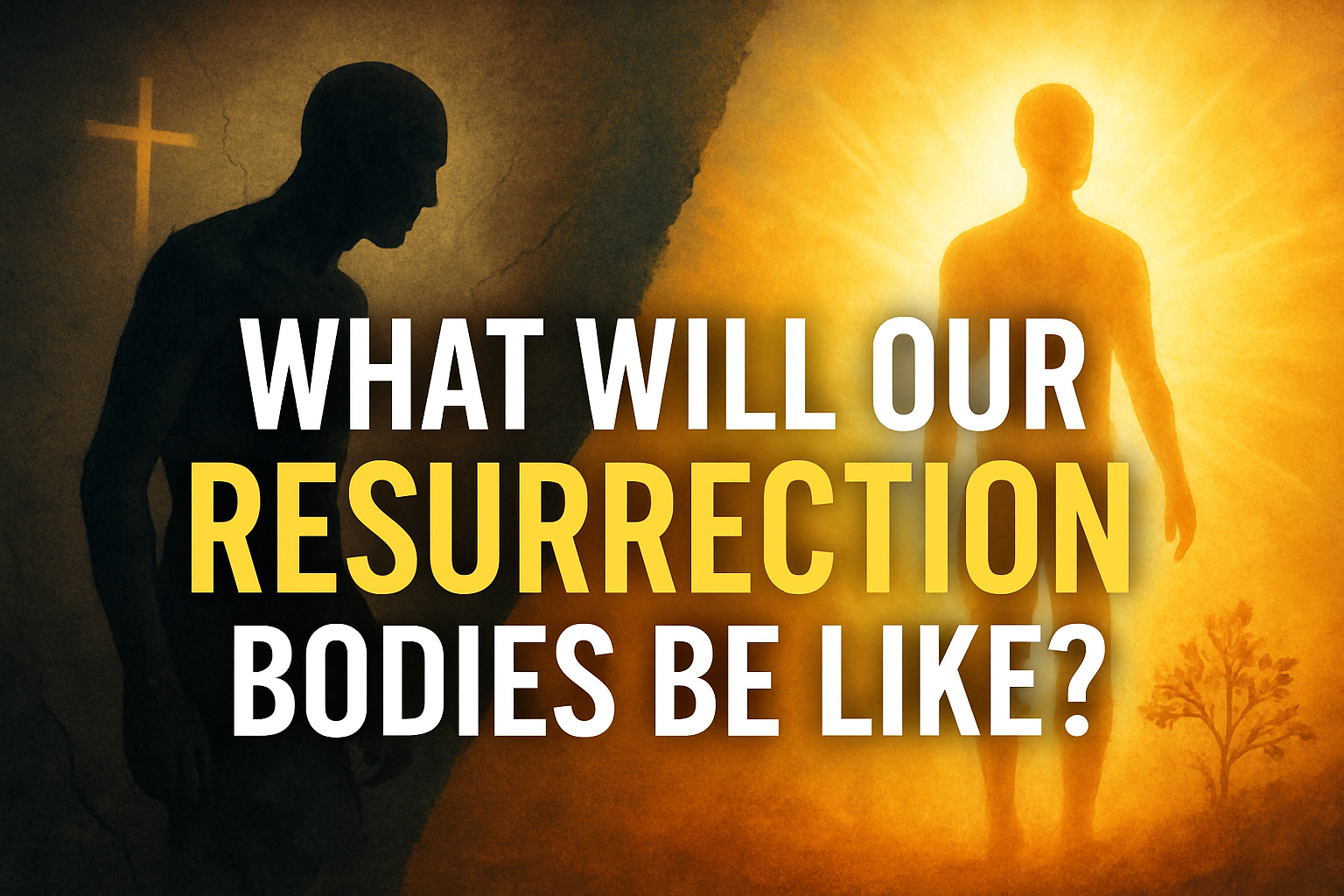
What Will Our Resurrection Bodies Be Like? | 1 Corinthians 15 Explained

Two men stand in shadow from a light behind them. Text: "What will our resurrection bodies be like?"

1 Corinthians 15:35-49

But someone will ask, “How are the dead raised? With what kind of body do they come?” You foolish person! What you sow does not come to life unless it dies. And what you sow is not the body that is to be, but a bare kernel, perhaps of wheat or of some other grain. But God gives it a body as he has chosen, and to each kind of seed its own body. For not all flesh is the same, but there is one kind for humans, another for animals, another for birds, and another for fish. There are heavenly bodies and earthly bodies, but the glory of the heavenly is of one kind, and the glory of the earthly is of another. There is one glory of the sun, and another glory of the moon, and another glory of the stars; for star differs from star in glory.

So is it with the resurrection of the dead. What is sown is perishable; what is raised is imperishable. It is sown in dishonor; it is raised in glory. It is sown in weakness; it is raised in power. It is sown a natural body; it is raised a spiritual body. If there is a natural body, there is also a spiritual body. Thus it is written, “The first man Adam became a living being”; the last Adam became a life-giving spirit. But it is not the spiritual that is first but the natural, and then the spiritual. The first man was from the earth, a man of dust; the second man is from heaven. As was the man of dust, so also are those who are of the dust, and as is the man of heaven, so also are those who are of heaven. Just as we have borne the image of the man of dust, we shall also bear the image of the man of heaven.

What Will Our Resurrection Bodies Be Like? 1 Corinthians 15 Explained

Jesus, Grace, mercy and peace to you from God, our Father and from our Lord and Savior, Jesus, Christ, Amen, we are working through our series on First Corinthians, chapter 15, talking about the implications of the resurrection for Christians, looking at Jesus's death and bodily resurrection so that we can see what it means for our own bodies in eternal life.

The first Sunday, we looked at the eyewitnesses and saw that we believe in the resurrection of Jesus, not despite the evidence, but because there were people there who saw him die and rise, and they gave us their eyewitness testimony.

The next session was about the resurrection and how Heaven is not the goal of the Christian life, but Jesus's return when he will call us from our graves and give us new life, body and soul after that, we reflected on on that and how it shows us that death is the enemy, then that life means having a body. And we talked about what that means, especially at funerals, and how our language needs to reflect that last time, we talked about how our bodies matter now as we look forward to the coming joy of the resurrection, and we ended with a question, What will these bodies be like on The day that Jesus returns?

It is really nice that St Paul asked that very same question he writes,

But someone will ask, how are the dead raised with? What kind of body do they come You foolish person? What you sow does not come to life unless it dies. And what you sow is not the body that is to be but a bare kernel, perhaps of wheat or some other grain. But God gives it a body as he has chosen, and to each kind of seed, its own body. For not all flesh is the same, but there is one kind for humans, another for animals, another for birds and another for fish. There are heavenly bodies and earthly bodies, but the glory of the heavenly is of one kind, and the glory of the earthly is another. There is one glory of the sun and another glory of the moon and another glory of the stars. For star differs from Star in glory. So it is with the resurrection of the dead. What is sown is perishable. What is raised is imperishable. It is sown in dishonor. It is raised in glory. It is sown in weakness, it is raised in power. It is sown a natural body. It is raised a spiritual body. If there is a natural body, there is also a spiritual body. Thus it is written the first man, Adam became a living, living being. The last Adam became a life giving spirit. But it is not the spiritual that is first, but the natural and then the spiritual. The first man was from the earth, a man of dust. The second man is from heaven. As was the man of dust, so also are those who are of the dust, and as is the man of heaven, so also are those who are of heaven, just as we have borne the image of the man of dust, we shall also bear the image of the man of heaven.

Clears it up, doesn't it? That's a lot of words to tell. Us what's happening. But what St Paul is doing is he starts, first of all, challenging their assumptions. That first paragraph that talks about the birds and the wheat and the stars and all of that he's trying to say very simply, the resurrected body will be different from your body.

Now, he needs to give them that, because they are imagining a resurrected body that looks like their current body. And you can understand if you were just to raise the body you have, that wouldn't be all that awesome, unless you're about 22 In fact, the Greeks Tell a story about a man named tithanus.

Tithanus, in this version of the story, fell in love with a goddess Eos, and they were so in love that she wanted her mortal husband to live forever. So she went to Zeus, and she asked Zeus to give him eternal life. And Zeus smiled and granted him the wish. He smiled because she did not ask for eternal youth, just eternal life, which meant that he continued living and aging naturally, and after several 100 years, that was not all very good for him in us. You can imagine then why the Corinthians might think it's ridiculous that we would have our bodies back when we are raised from the dead, decaying, broken, hurting bodies. Why would we not be elevated into a new spiritual plane like the Greeks thought they imagine a zombie apocalypse on the day Jesus returns, groaning, mumbling, looking for brains.

Paul's answer is simple. The resurrected body is different from the present body in many and various ways, and he uses all of this language about sowing and growing, heavenly bodies and earthly bodies to introduce it. And he gets down to it when he says, What is sown is perishable. What is raised is imperishable. It is sown in dishonor. It is raised in glory. It is sown in weakness. It is raised in power. It is sown a natural body. It is raised a spiritual body. What happens is our bodies become different. The body that goes into the grave will be raised not as it was placed in the grave, but in glory and power. Paul tells us that Jesus is the first fruits of the resurrection, which means that he is the pattern for our own resurrections. And when Paul describes the perishable and imperishable dishonor and glory and all the rest. What we can do is look to Jesus to see what that body will be like. And so when Jesus was raised from the dead, we know that that body is physical. He did all sorts of things, including eat with his disciples, showing that he was not a spirit, but a body.

We also know that that body will have some sort of content continuity with our current bodies and. Because they recognized him. Now, some of them didn't at first, but you want to know why they thought he was dead. Sometimes, when I'm in the grocery store and not wearing my clerical people have no idea who I am, right? It happens all the time. Then they go, Pastor? it takes a sec.

Can you imagine thinking Jesus was dead and then seeing him? It would take more than a second to go? Wait a second, Jesus? And I think that's what's going on. But there is also discontinuity with the old body. When Jesus rose from the dead, He rose never to die again. That's a big deal right now, death has no dominion over him. The body that was subject to pain and hurt and disease is subject to it, no longer the suffering servant, the one who came to bear the weight of sin in his body bears that weight no longer, because he has destroyed the power of sin forever.

And that means that while we will still be us, we will still have our bodies. They will be glorified in the pattern of His glorious body, and so there will be no sickness or disease or hurt or pain ever again. We will live forever in perfection. We will be raised from the dead to eternal life, empowered by the Spirit to live forever with Christ, following his pattern in God. Now, sometimes, when people think about the perfect resurrection That we will see and the perfect world that God will create on the day that Jesus returns, we might ask something. Well, there's a question, won't that be boring?

Have you ever asked that one, what will we do in the resurrection when there is no battle to fight, no growth, no challenges to conquer, when we are just perfect. That is a question that a television show that I loved asked. It's called The Good Place.

Anyone seen the good place? In the good place they go to the equivalent of heaven. And when they get there, the people who are there are so bored with perfection that it has rotted their brains. They can get anything they want at any moment, at any time. And they're so bored by instant gratification that they can't do anything. They are like the living dead zombies. And it would make sense then, if that's what eternal life was like, if we were raised from the dead, as we currently are, right? Because we like challenge. We like growth. We actually need things to do to stimulate ourselves, but that's because built into our bodies is sin. We need challenge because we're sinners.

When we are raised from the dead, it will not be like the Good Place sinners in perfect bodies getting whatever we want. We too, our whole being will be cleansed, not just our physical nature, but also. Our mind and behavior, we will not need challenge, because we will be perfect, always and perfectly, trusting in our Savior, always ready to receive the perfection that Christ gives us, never worrying about the future, ever again, if you can imagine it, never wondering what we might need, or questioning the good and gracious will of our God. We will simply do what we were made to do, love and serve one another in perfection for all eternity.

It is so crazy, I have a hard time even imagining what it would be like, which is why I think the Gospels and St Paul and Revelation don't even try to describe it, because it is so different from what we have now that it would boggle our mind to think about it. We will be raised from the dead into a life that is so perfect and so different we can't even imagine it being as great as it possibly is. What amazing gift that Jesus will give us when He returns on that last day to raise us from the dead, we will be sown with our bodies that are perishable and raised imperishable dishonor and raised in glory We are in weakness now we will be raised in power, a natural body now a spiritual body, following the pattern of our Lord Jesus Christ, to Live in perfection forever in Jesus' name. Amen, please stand and.

Find us on Youtube, Apple Podcasts, or Spotify.

Why the Resurrection Matters for Your Body | 1 Corinthians 15 Explained

Martyr Amidst Flames with Divine Vision.png

1 Corinthians 15:20-29

But in fact Christ has been raised from the dead, the firstfruits of those who have fallen asleep. For as by a man came death, by a man has come also the resurrection of the dead. For as in Adam all die, so also in Christ shall all be made alive. But each in his own order: Christ the firstfruits, then at his coming those who belong to Christ. Then comes the end, when he delivers the kingdom to God the Father after destroying every rule and every authority and power. For he must reign until he has put all his enemies under his feet. The last enemy to be destroyed is death. For “God has put all things in subjection under his feet.” But when it says, “all things are put in subjection,” it is plain that he is excepted who put all things in subjection under him. When all things are subjected to him, then the Son himself will also be subjected to him who put all things in subjection under him, that God may be all in all.

Why the Resurrection Matters for Your Body | 1 Corinthians 15 Explained

So today, we are in the middle of a sermon series. We are talking about First Corinthians, chapter 15, working through the implications of Christ's resurrection for the Christian church and what it means that we have bodies and souls. Why is it so important that Christians are actually humans, not just spirits?

Over the course of this sermon series, we talked about:

  • The eyewitnesses of the resurrection — the men and women who saw Jesus die on the cross and then rise from the dead.

  • How we believe in the resurrection not because we believe in this fanciful story, but because of the testimony of these eyewitnesses.

  • How heaven is not the goal of the Christian life, because Jesus did not die on a cross to have his soul go up to be with the Father, but to rise from the dead, body and soul. And so we, too, follow that pattern.

  • Last Sunday, we talked about the phrase, "the last enemy to be destroyed is death," and how sometimes around the end of life, Christians misuse our language to talk as if death is a friend and not an enemy — and that the real eternal life that we're looking for is the resurrection, and that death, the enemy, will be destroyed on the last day.

Today's Focus: 1 Corinthians 15:29–34

So here is what St. Paul says, starting at verse 29:

"Now if there is no resurrection, what will those do who are baptized for the dead? If the dead are not raised at all, why are people baptized for them? And as for us, why do we endanger ourselves every hour? I die every day — I mean that, brothers — just as surely as I glory over you in Christ Jesus our Lord. If I fought wild beasts in Ephesus for merely human reasons, what have I gained? If the dead are not raised, 'Let us eat and drink, for tomorrow we die.' Do not be misled: 'Bad company corrupts good character.' Come back to your senses as you ought, and stop sinning; for there are some who are ignorant of God — I say this to your shame."

There are some confusing sentences in this passage, and you shouldn't feel bad about being confused, because everybody is confused by these — even the really smart people. I watched a video in preparation for this about those opening sentences that talked about being baptized for the dead, and they all said, "We have no idea what this means." These are the guys who are teaching at seminaries, who know Greek better than I know English. They have no idea.

There are lots of theories and lots of ways of trying to explain it, and, you know, people write books about this — but in the end, we don't really know what St. Paul was talking about when he said "baptized for the dead," or "on behalf of the dead," or "concerning the dead." However you translate it, this is something we just don't understand. So... we’re going to skip it.

What We Do Know

Let’s talk about what happens next instead.

What St. Paul says is he is protesting their idea of salvation with the idea that he suffers in his body for Christ. He says:

  • If the dead are not raised, why in the world do I suffer for Christ?

  • If Christianity is about now or is just a spiritual religion, I don’t need to discipline myself.

  • I don’t need to stand up for Christ and take the wounds of Christ on myself if the dead are not raised.

  • In fact, he says, “If the dead are not raised, what are we doing at all? Let us eat and drink, for tomorrow we die.”

Why not just have as much fun as you can, have this spiritual life inside your heart in Christ, and then die and go to heaven, and everything’s fine?

What St. Paul is doing is pointing out a problem in the Corinthians — the implications of what it means if Christ is only about now or only about this spiritual life. He says nothing that we’re doing now makes any sense if that’s the case.

The Implications of a Bodily Resurrection

St. Paul fought the wild beasts. He was beaten many times. He was stoned all over the place, imprisoned, whipped. He went through a lot, didn’t he?

In fact, those are only the things we talk about — the things that are written down in Scripture. I am sure that he went through a whole lot more. And then eventually, he died a martyr’s death.

The same is true for all of the apostles — except for John. And John — they only attempted to kill him.

Many Christians face a life of difficulty and hardship — a life where they are under threat of physical violence, imprisonment, or even death.

We in America are pretty fortunate that:

  • We don’t have a government that wants to hunt us down and imprison us.

  • We don’t have powerful religious groups that will sometimes start a riot and chase us out of our villages — which still happens all over the world.

But the Christian life is still difficult.

  • We still face hardships.

  • We still face hurt.

  • We still discipline our bodies in response to Christ.

As Jesus tells us: “If anyone would come after Me, he must deny himself, take up his cross, and follow Me.”

If Christianity is about today and today only, and our bodies are just for this earth, why would we discipline our bodies?

It would just be a spiritual, mental religion. All we would have to do is have the right internal disciplines — a little bit like the Jedi and their force-ghost eternal life. All you have to do is think the right things, and then you get to die and go off to heaven.

But that’s not what we’re here for.

Our Bodies Matter

Our bodies will be raised from the dead, which means:

  • What we do in the body now is important.

  • What we do with our bodies today matters.

Because Jesus came to die not just for our souls but for our bodies.

He came not to be a spiritual guru to give you the right mental exercises and an internal spiritual path, but to lead us through death into eternal life. Jesus gives us the resurrection.

And if we don’t have a resurrection, if there is no bodily rising from the dead, we might as well go out and do what St. Paul says:

“Let us eat and drink, for tomorrow we die.”

That’s what our world tells us to do, right?

  • Have fun while you can.

  • Enjoy life.

  • Do whatever you like.

And you all know — that’s not what Christianity is all about.

We know this not just because Holy Scripture tells us. You’re not doing it just because it’s written in a command somewhere, but because this makes sense.

Against the Spiritualization of Christianity

One of the other implications of this is that we have to fight against the spiritualization of Christianity.

This has happened all over our culture. People act as if Christianity is just a mental attitude.

And you know this because:

  • You’ve talked with lots of people who think they are Christians because they know the name of Jesus.

  • They don’t do anything or live in a particular way.

  • There is no church attendance or anything like that.

  • No evidence of the Holy Spirit in them.

They simply say, “I have the name of Jesus in my heart, therefore I must be a Christian.”

But we know:

  • You’re not saved by your knowledge.

  • You’re not saved by an internal mental discipline.

  • You’re not saved by a spiritualization of the faith.

We are saved by grace through faith on account of Christ. And that grace is delivered through means — through the Word and Sacraments.

Real Life, Real Grace

The spiritualization of the Christian faith happens the way the Corinthians were doing things.

If you read the book of Corinthians, they thought because they had this faith, they could do whatever they wanted with their bodies — including some pretty crazy... some pretty crazy stuff. You should read it. It’s not the kind of thing I can say over the microphone to a bunch of pious Christians — especially not put out on the internet on YouTube. They might get me banned.

It was pretty nuts. And this is why St. Paul says to them:

“Bad company corrupts good morals.”
“Some of you don’t know God, and I say this to your shame.”

Paul’s being pretty hardcore.
Our bodies matter, and what we do with them matters.

Serving the Eternal Body

So the real question then is: Why?

  • Why do we discipline ourselves?

  • Why do we gather here?

  • Why do we take our time?

It’s not just this mental thing.

We do it because we want to rise from the dead on the last day — because Jesus calls us to follow Him. And so you gather here to receive His grace. You gather here:

  • To hear the Word,

  • To receive the Sacraments,

  • To have the grace of God given bodily to us by the power of the Holy Spirit.

Because we know Christ is coming, and what we do in our bodies matters.

And the means of grace come to us in our bodies:

  • In Baptism,

  • In Holy Communion,

  • Sometimes with the hand of the pastor put on your head in my office when I say, “I forgive your sins in the name of the Father, Son, and Holy Spirit.”

Our bodies matter, and so we hold on to that hope, and we discipline ourselves, and we do these things because we know eternal life is worth it. Christ is coming.

The Beautiful Implication

The last thing about our bodies mattering and the life of the world to come is actually super cool.

Well, all of this is kind of cool. I love it. But I think this is really cool — because this is something I don’t think Christians talk about very much:

When you help someone in their body, you are doing an eternal good.

When you feed someone — hospitality people — when you feed someone, even if it’s a delicious donut, you are supporting a body that will live forever.

Isn’t that cool?

This body that you are supporting, that you are serving, will live forever.

Moms, dads — you fed a lot of baby food to your kids, right? It was kind of sloppy, because babies — when they chew, it comes out their lips and just... all over their face.

And I bet when you were doing that moment, you didn’t think to yourself, “I am serving eternity.”

You thought, “This is gross,” right?

But that’s what happens. You are contributing to an eternal being when you serve someone’s body.

Eternal Impact

The things that you do look forward into eternal life, because:

  • Our bodies matter.

  • They are not shells to be discarded.

  • They are not things that will be left behind on Earth.

  • They will be raised on the last day into eternal life.

And so the physical, and the emotional, and the things that we are called to do in our everyday vocations — they are not less than the spiritual, but are part of the whole thing.

You are serving a body that will last into eternal life.

And we can’t set aside the Gospel of Jesus Christ, of course — because if we want that body to live forever with us in eternal joy, they need to hear the Gospel.

But every time you go out and serve someone — whether it’s in your jobs, in your homes, whatever you're doing when you give someone food or help or whatever it is, you are serving something that lasts forever, and there is cosmic and spiritual service involved in that. And I think that's cool, don't you, because our bodies matter both now and into eternal life. And St Paul is helping the Corinthians to remember this, to remember that what we do with ourselves, our bodies, our lives, it matters in our discipline, in the Christian faith, because Christ is coming. He is coming not to take our souls and put us up in heaven, but to raise the bodies that we live in now into everlasting life, and what a joy that is. Now, of course, what this is going to do is it's going to raise a question, what kind of body will that be? What sort of body does it have in relation to my body. Now it can't be just like this. Come back next week, and you will find out exactly what St Paul says about that body, because it's pretty cool. Because what he says is, but someone may ask, how are the dead raised with? What kind of body will they come find out more next Sunday in Jesus' name. Amen..

Find us on Youtube, Apple Podcasts, or Spotify.