Scripture Reading: Luke 21:5-23
And there followed him a great multitude of the people and of women who were mourning and lamenting for him. But turning to them Jesus said, “Daughters of Jerusalem, do not weep for me, but weep for yourselves and for your children. For behold, the days are coming when they will say, ‘Blessed are the barren and the wombs that never bore and the breasts that never nursed!’ Then they will begin to say to the mountains, ‘Fall on us,’ and to the hills, ‘Cover us.’ For if they do these things when the wood is green, what will happen when it is dry?”
Two others, who were criminals, were led away to be put to death with him. And when they came to the place that is called The Skull, there they crucified him, and the criminals, one on his right and one on his left. And Jesus said, “Father, forgive them, for they know not what they do.” And they cast lots to divide his garments. And the people stood by, watching, but the rulers scoffed at him, saying, “He saved others; let him save himself, if he is the Christ of God, his Chosen One!” The soldiers also mocked him, coming up and offering him sour wine and saying, “If you are the King of the Jews, save yourself!” There was also an inscription over him, “This is the King of the Jews.”
One of the criminals who were hanged railed at him, saying, “Are you not the Christ? Save yourself and us!” But the other rebuked him, saying, “Do you not fear God, since you are under the same sentence of condemnation? And we indeed justly, for we are receiving the due reward of our deeds; but this man has done nothing wrong.” And he said, “Jesus, remember me when you come into your kingdom.” And he said to him, “Truly, I say to you, today you will be with me in paradise.”
The Lowly King: Understanding Christ's Crucifixion at the End of the Church Year
Sermon by James Huenink
Christ the King Sunday: Why We Remember the Cross
Grace, mercy, and peace to you from God our Father and from our Lord and Savior Jesus Christ. Amen.
As I told you before our service began, we are at the end of the church year, looking forward to the return of Christ, the end of time, Judgment Day—when all things come to the final point that God has arranged them to be, when history finally comes to its end, the goal of what God has been doing all this time.
We expect our Savior to come on the clouds with power and might and glory. The voice of the archangel and the trumpet will sound, the dead will be raised, and the King will sit on His glorious throne and judge the living and the dead, whose kingdom will have no end. What a glorious day that will be.
And so with that being our theme for today, I think it's a little weird that our lectionary chose the opposite, right? We're not talking about Jesus's predictions of His coming with power. We're not looking at His parables of His return, where He divides the sheep and the goats, or where there are people knocking at the door and He says, "I didn't know you." None of the casting into the outer darkness, none of those things.
Our lectionary decided to choose the story of His crucifixion. Wonder why?
Well, I actually have a theory. The question was rhetorical. I think it's because our lectionary wants to remind us of who our King is right now, even as we look forward to His glorious return. Which is why Luke just gives us a very simple phrase to describe our Savior that is just as true now as it was then: "This is the King of the Jews."
The Mockery That Became Truth
The soldiers and Pontius Pilate meant that to be a mockery. That is what they did with rebels. They would put a sign up that said, "This is the king of the Germans," or "the king of the Angles." Whenever they conquered someone, they said, "This is what happens when a king stands up to the Roman Empire." They would show how the kings that fought against them were always made lowly and destroyed.
Here, however, it is a reminder of what the King of the church is like—a reminder of the pattern that we follow. Not a symbol of defeat, but the Savior who comes on this side of the resurrection and shows us what it's like to follow Him, what our church is like in a broken and fallen world as we deal with pain and hurt.
A King Who Is Lowly
And so Jesus shows us that He, the King, is lowly—which is difficult for us. To look at a king and say, "This is what it's supposed to be. This is the will of God"—that a king would come and be lowly, that His throne was a cross, that His crown was thorns, and that at His right hand and His left hand were criminals.
His whole life was like that. The Son of God, the King of the world, lowly—an itinerant preacher. And here at the end, we have an image of our King on His throne: no gold, no jewels, no crown that is beautiful. Just someone who is lowly, broken, and bleeding.
And the people around Him, the ones who would normally be fawning over a king, trying to get His favor—instead of giving Him all the compliments and flattery, they cry out with insults. They say things like, "He saved others, let Him save Himself if He is the Christ of God, His Chosen One."
And yet He doesn't. He is nailed there. He dies.
The Beauty of Suffering
What this shows us, though, is the beauty of the suffering of our God and King, the Savior. If He had decided to be glorious, if He had decided to call His angels down and bring about judgment, He would have left us all in our sin. Instead, His suffering and pain is victory over sin and death. His torture, His wounding, His lowliness is our victory in Christ. And because He did this, we have eternal life and forgiveness of sins.
It should then not surprise us that a church that follows a king like this might itself seem lowly—perhaps not as glorious as we would like it to be. That it is filled with human beings who are sinners, in a society that is broken, where not everything is going right. A church that can be filled with sadness and sudden changes and hurt. A church that isn't always going in the directions that we might like, or where our lives are not always the successes that we want them to be.
It should not surprise us that we follow in the footsteps of our Savior—a Savior who came not in glory but in lowliness, a Savior who came not to look victorious but to suffer and die. It should be no surprise that we deny ourselves, take up our crosses, and follow Him, because we are a church with a King who is lowly, who suffers and dies.
The Pattern of Christ: From Lowliness to Glory
And when we do this, when we live in this life, we follow His pattern—which means there's a promise there too. The pattern of Christ leads not just to suffering and death on a cross, but to resurrection and glory. And even better, on the day that He returns, all of the lowliness of the life that we see now will be changed to the glory of the eternal King.
We who walk in His humility, who follow the cross pattern of Christ, will also follow His pattern of the glorious King who comes on the clouds with the trumpet and the voice of the archangel, when He will reign forever and every knee will bow and every tongue confess that Jesus Christ is Lord. This is what we look forward to, why we live through this now as we cling to the promise of His glorious return.
A King Among Criminals
Jesus didn't just live a lowly life. He also lived amongst criminals. Here He was accused. He was falsely judged as evil. That's the reason why they put Him on the cross. To the Gentiles, to Pontius Pilate, He was a rebel rebelling against Caesar. He was someone who claimed to be God, even though He was not, according to the high priests. He was a criminal to be mocked, and that's what the people did.
The leaders, the world, the society—they saw in Jesus someone to be rejected and hurt, someone to be told that He was evil. And it should be no surprise that we who follow in our Savior's footsteps, who have a King who is rejected by the authorities and powers and people of the world, that we might have the same.
In fact, sometimes even our own hearts tell us this. Sometimes even our own hearts tell us that, well, church shouldn't be like this. Life shouldn't be like this if we're on God's side. As we whisper to ourselves the things like they said in Malachi: "And now we call the arrogant blessed. Evildoers not only prosper, but they put God to the test and they escape."
That stuff out there looks so much better. Aren't we on God's side? Shouldn't things be better? We might even accuse ourselves in our own hearts. But we have a King who suffered through that, a King who took the accusations, went to a cross and died there, a King who lived through all of this and simply received it so you could live.
The Pattern of the Accused King
We have to remember that this accused King is our pattern. And so even when we look at the world and say, "It seems like victory is out there but not in here"—that's what it looked like when Jesus was on the cross. And just as that changed for Jesus, that will change for us.
Three days later, He rose from the dead. The King of all creation stood alive, revealed to the world His power and His might, and ascended the throne on high where He sits at the right hand of the Father. And when He comes again, we too will be vindicated as the King comes and says to us, "Well done, good and faithful servant"—that by His death and resurrection, He has claimed us as His own and made us one with Him.
The Mercy of the Dying King
One of the other things that we see as this great King in His lowly state is His mercy. Jesus, as He is accused, as He is lowly, as He is broken, as He is beaten, as He is nailed to a cross—and yet He is forgiving. How amazing is that?
They lift Him up, they nail Him to the cross, and He says, "Father, forgive them, for they know not what they do"—even as they cast lots under His feet for the clothing that they took from Him.
Or how about the mercy He shows to a criminal who only moments before may have been insulting Him, but then turns to Jesus and says, "Jesus, remember me when You come into Your kingdom"? And He says to the thief, "Today, I say to you, today you will be with Me in Paradise."
How amazing is the mercy of a Savior who is nailed to a cross and dying an excruciating death and still has time for forgiveness. Forgiveness and love comes out to us today as well, who offers the same promise to you: "You will be with Me in Paradise."
The Church of Mercy
And the church who follows the pattern of our Savior—we too extend this kind of mercy in everything we do. The church is a place where forgiveness of sins is proclaimed to all who come to us, even to the kinds of people who might nail someone to a cross and stab them with a spear and whip him and beat him and cause him to die. Even to those who might insult us and hurt us, we are always proclaiming the grace and mercy of God.
And sometimes what that means is we're going to look a lot like Jesus: beat up, hurt, when our forgiveness and love is rejected and our lowliness is exposed. And we who just love and care and serve like a Savior don't get it in return.
The mercy of God is what the church is given today. The gospel of Jesus Christ goes out.
The Coming Judgment
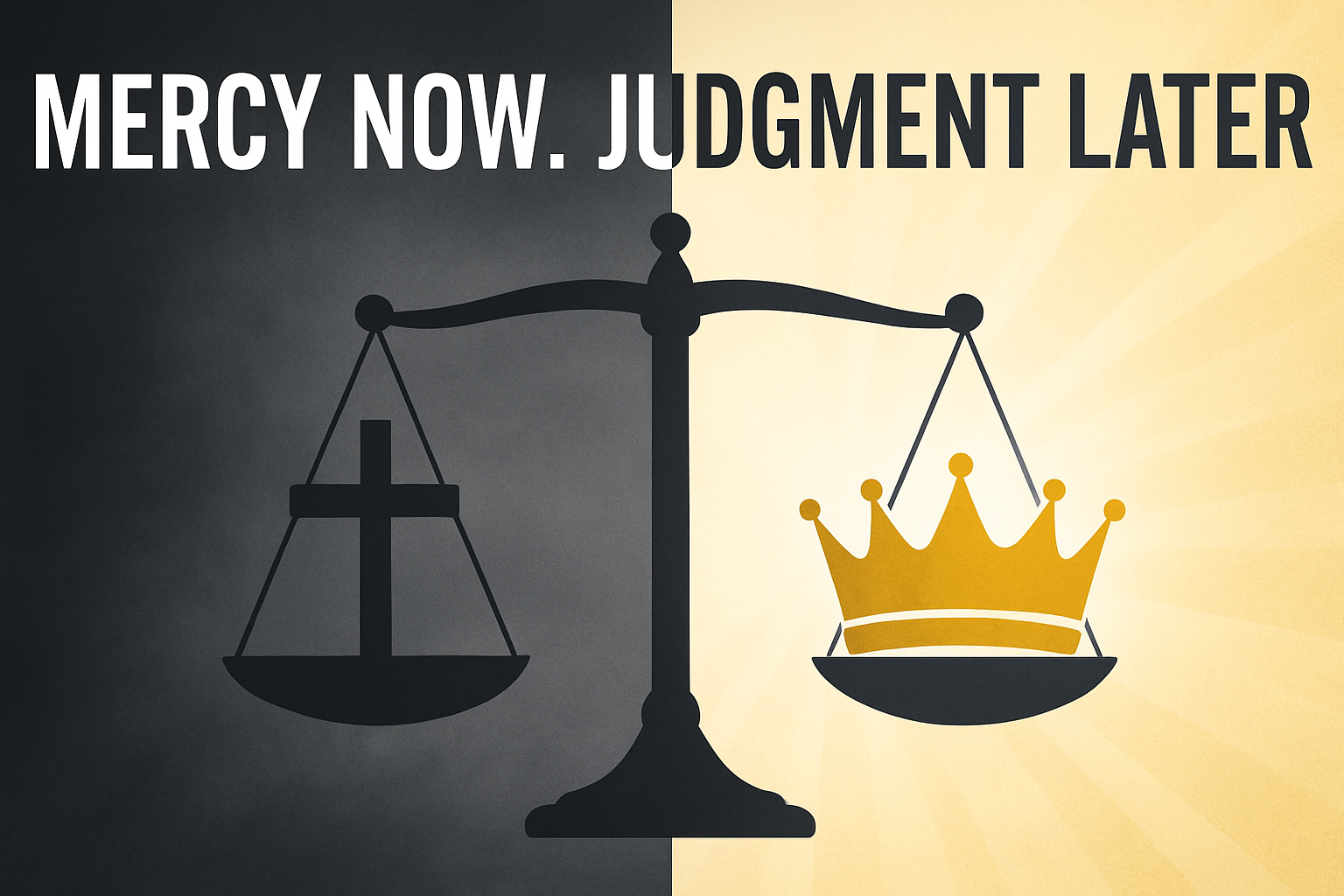
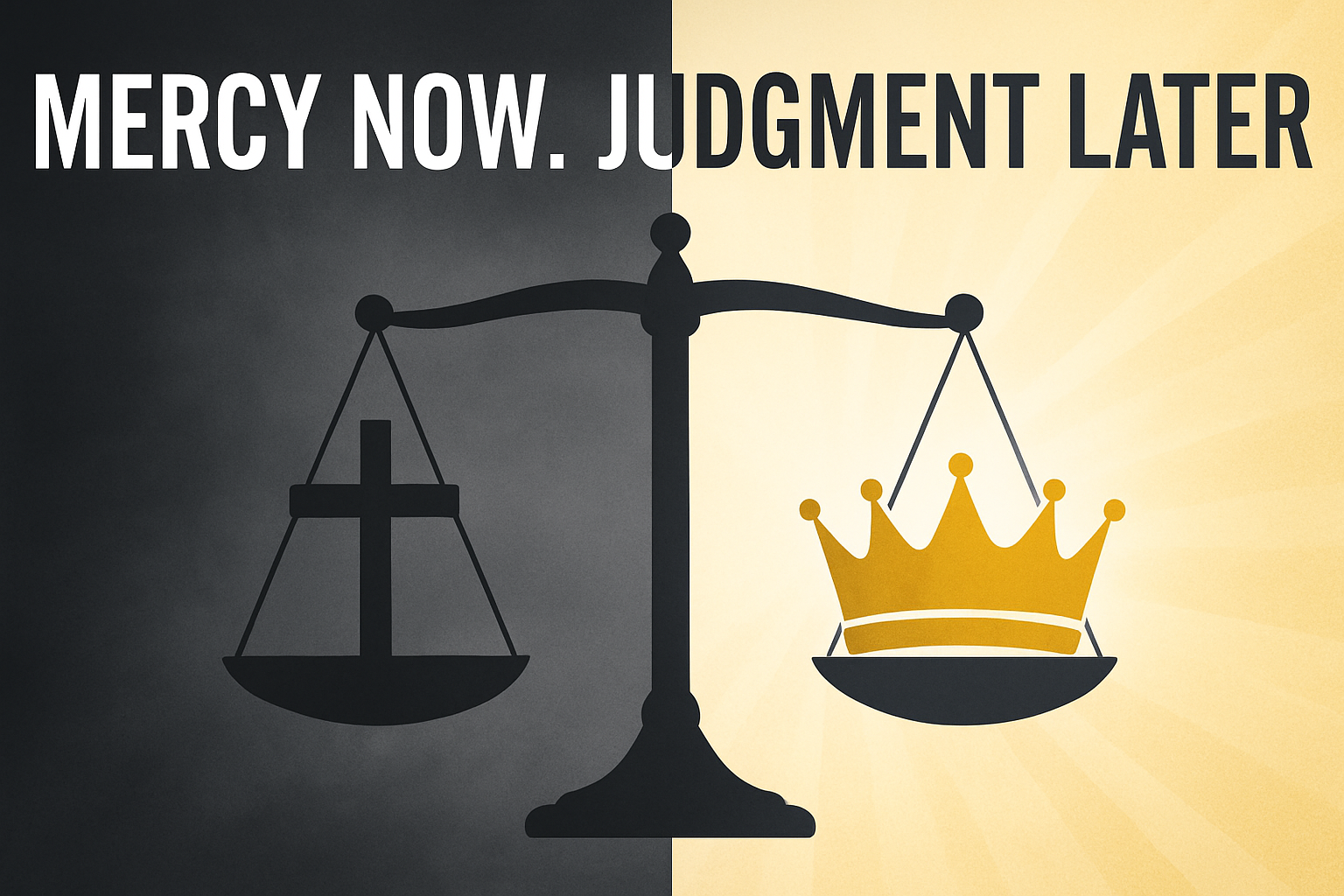
But that's not always the way it's going to be. On the last day, the door of mercy will be closed. The path of grace will end, and Christ will come and bring judgment on this earth. And we who have been given the mercy of God will be chosen to be with Him, to reign with Him forever.
And then the judgment will begin for all those who reject that mercy, all those who turn away, all those who think that Christ is too lowly or broken for them. They will see our God and Savior with His might and power, and He will judge the living and the dead. We will be on the right side with the grace of God given to us, a glorious resurrection to reign with Him forever. Those who are not will be cast into eternal torment, turned away as the door of grace will close when He appears in the sky with power and might.
Conclusion: Clinging to the Lowly King
This is why we cling to that mercy now. Why we proclaim to the world the grace of God and welcome all who come here—because we know the judgment part, that's not for us. Jesus will do it on the last day. He will raise up His lowly church and vindicate us and give us eternal life.
And we cling to a Savior who died on a cross, who shows us the pattern of grace and love, and calls us to cling to the promise of His return.
In Jesus's name. Amen.
Find us on Youtube, Apple Podcasts, or Spotify.