Scripture Reading: Psalm 139:1-12
O Lord, you have searched me and known me!
You know when I sit down and when I rise up;
you discern my thoughts from afar.
You search out my path and my lying down
and are acquainted with all my ways.
Even before a word is on my tongue,
behold, O Lord, you know it altogether.
You hem me in, behind and before,
and lay your hand upon me.
Such knowledge is too wonderful for me;
it is high; I cannot attain it.
Where shall I go from your Spirit?
Or where shall I flee from your presence?
If I ascend to heaven, you are there!
If I make my bed in Sheol, you are there!
If I take the wings of the morning
and dwell in the uttermost parts of the sea,
even there your hand shall lead me,
and your right hand shall hold me.
If I say, “Surely the darkness shall cover me,
and the light about me be night,”
even the darkness is not dark to you;
the night is bright as the day,
for darkness is as light with you.
God Knows You and Chooses You Anyway: A Sermon for St. Andrew's Day
Preacher: James Huenink
Feast Day: St. Andrew the Apostle
Scripture: Psalm 139
Opening Prayer
Grace, mercy, and peace to you from God our Father and from our Lord and Savior Jesus Christ. Amen.
Introduction: The Call of St. Andrew
Today we're celebrating St. Andrew and hearing all about the different readings that talk about the Word of God going out and coming to people and the presence of Christ in their lives. St. Andrew was called by Christ in the very beginning. He heard John say, "The Lamb of God who takes away the sin of the world." He followed Christ and immediately went to his brother and called him to do the same.
After Jesus ascended into heaven, Andrew and all the apostles went out into the world proclaiming the good news of Jesus Christ. Many went as far as France or Spain, others to India. But Andrew didn't get that far. We believe that he ended up being martyred in the city of Patras, which is in Achaia, somewhere around the Greece area, at about 60 AD—not terribly long after Jesus ascended into heaven.
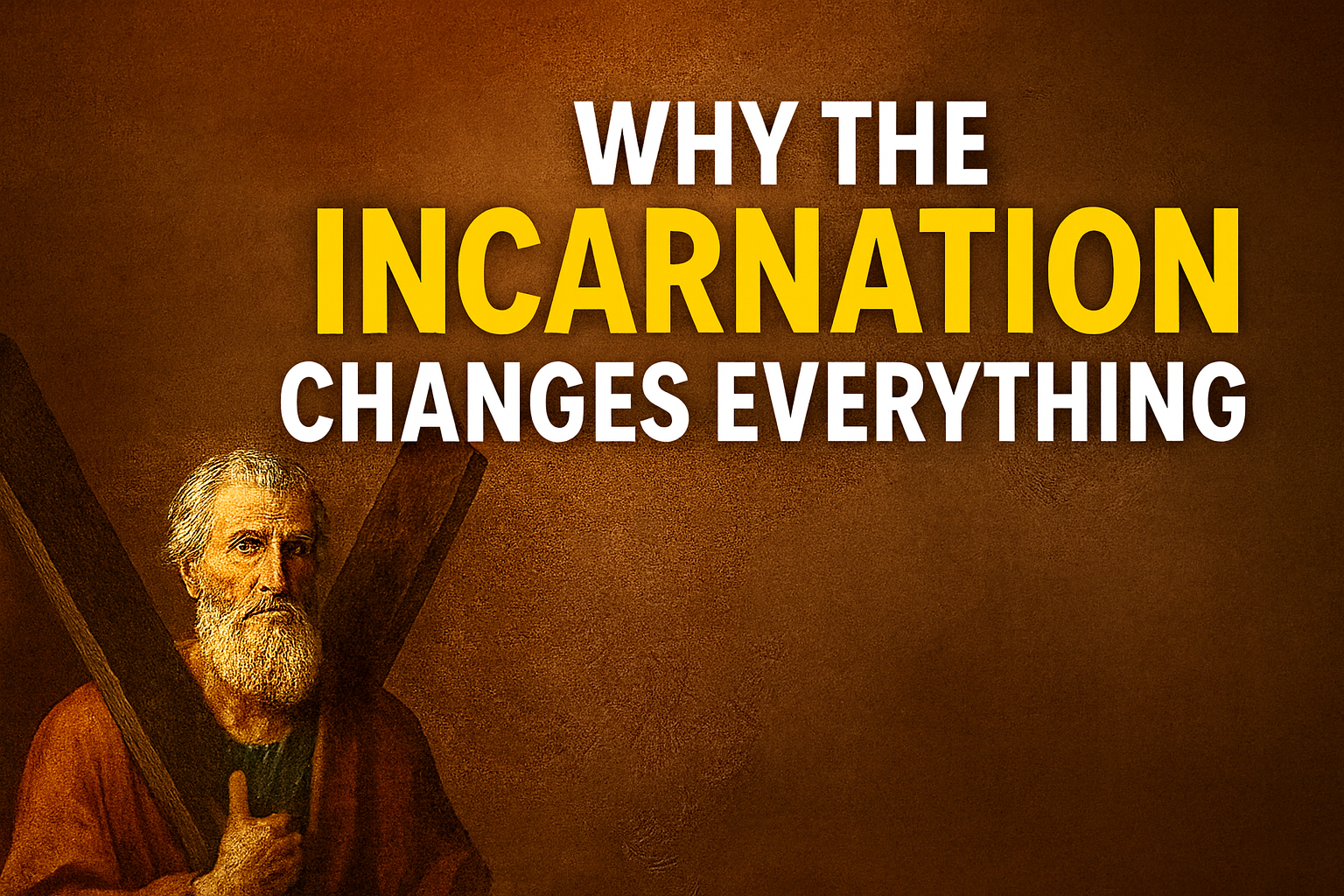
The legend of Andrew is that he was crucified on that X-shaped cross, which they now call the Cross of Saint Andrew, because he refused to be crucified on the same kind of cross as Jesus. And as I tell that legend, I think, "Absolutely, that's the kind of thing that people who are going to execute someone do—they say, 'How would you like to die? We're open to suggestions.'" Doesn't quite happen that way. Still, this is the legend that we have been given: the stories that we have of an apostle going out into the world to proclaim the message of Jesus Christ.
The Psalm and the Incarnation
The psalm that has been chosen for today is what I'd like to look at—what the presence of Christ does in our lives because of Jesus and His incarnation. This is what Andrew proclaimed to the whole world: that God comes to us and gives us these great benefits.
Because of Jesus, the psalmist would have seen this in the context of God's presence being in the temple and His word being the law of Moses. And so it was there that the psalmist would have seen this and made this main point of God being with us and guiding us. But we, on the other side of Christ with His death and resurrection, I think it is even more applicable to us when we see this psalm as an expression of the beauty of the incarnation of Jesus.
Now I'm going to have to explain what I mean by that, aren't I? The Incarnation means that God also became a human being. That's the story of Jesus: the Son of God left His heavenly throne and became a child, grew to become a man who suffered and died for us, which means that we have a Savior who is both God and a human being, all in one person. And the Incarnation helps us to see the amazing gifts expressed in this psalm.
God Knows You Completely
Let's take a look:
"O Lord, you have searched me and know me. You know when I sit down and when I rise up. You discern my thoughts from afar. You search out my path and my lying down and are acquainted with all my ways. Even before a word is on my tongue, behold, O Lord, you know it altogether."
Now we know that God, in His almighty power, understands and knows all things. But this psalm is even more beautifully seen when we realize that we have a Savior who does not just know them, but lived through them—through the way of human life.
We certainly understand the difference between, say, reading about something and experiencing it. We can read about how to repair a car or change the oil, but you really don't know how to do it until you've done it. And I know because I watch YouTube tutorials to do all sorts of stuff, and I watch it, and I read it, and I see it, and I think I know what I'm doing. And then I get to doing it, and I go, "How do you do that again?" And I have to go back and watch it over and over again until I get it right.
We can see in Christ that God just doesn't know, but He experiences everything that it means to be a human. The Son of God became one of us. He became a child. He hungered like we hunger. He slept like we sleep. He ate like we eat. His feet got sore and tired just like ours. His body ached when He worked too hard. He felt the pain of loss when loved ones died. Everything that we feel, Jesus felt too. He searched out our path and our lying down. He was acquainted with every single one of our ways. He knows exactly what it means to be a human in a human world, and He did it without sin.
He Chooses You Anyway
And the amazing thing about this is that He knows what it's like, and He chooses us. He knows what you are like, and He chooses you, just as He knew Andrew and chose him.
The message of the Gospels, as we see Jesus coming and choosing disciples, is not a message of Him choosing amazing figures who will go on to be these incredible men. He goes and He chooses sinners. And especially as you read Matthew, Mark, and Luke, these guys don't know what they're doing. They're always misunderstanding Jesus. They make mistakes. They run away when He gets arrested. Judas betrays Him. Peter denies Him. There's all sorts of problems. And Jesus knows this from the start. He knows humans. He knows us. He knows we're sinners, and He chooses us anyway.
He gives us His love, His peace, His grace, despite all the sin that's in our lives. He unites Himself to you because He wants to—in all your sin, in all your sadness, in all your hurt, in everything that you face. He comes to you and says, "You are mine."
Which means He knows the things that you want to hide from the rest of the world, that you might not publish on social media or write in the Christmas letters you may be drafting right now. He knows the pains that you don't tell anyone, the stresses that are just inside your heart. He knows everything about your life and chooses you and saves you. It's the point of becoming a human: to come and be one of us and live among us and be perfect, because we can't. And so He gathers together a people in Himself by His grace and His mercy.
God Guides and Leads Us
The next section of the psalm says:
"You hem me in, behind and before, and lay your hand upon me. Such knowledge is too wonderful for me. It is high; I cannot attain it."
This is about God's guidance in leading us and directing us in our lives. For many of us, we hear these words—"You hem me in, behind and before, and lay your hand upon me"—and we might think, "Oh wait a second, I really like choice, and God is pressing me and pushing me down, and that doesn't sound like a lot of fun to me."
And that might be true if our goal was to rebel or be evil. But the psalmist isn't talking about oppression, but guiding us in paths of righteousness, leading us in faithfulness, helping us to see what it is to be good and holy and true. And this is what God's hand does for us.
And the most amazing way the Incarnation of Jesus Christ does this is that the divine nature of God comes to be among human beings. That's one of the reasons why God had to become a human being—so that the divinity of God, the divinity of Christ, could join with the human and be connected to all of us.
Human nature becomes elevated in Christ by His holiness and righteousness. And the best way, I think, to show this is to ask the question: What will be different when Jesus returns and creation is made new?
Because God created Adam and Eve in the Garden of Eden, and they were perfect, and yet they still ate the apple. They didn't have original sin. They didn't have the temptations that we face and the pains and the problems, and yet they sinned. What will stop that from happening when Jesus returns?
The difference is that God and humanity are now one in Christ, and that divine nature goes out to all His people. The perfection of Christ will confirm us in righteousness, and our unity with the divine nature of Christ will keep us righteous forever. And you have that now. That is what baptism is about. Even as we struggle against our sinful side, the divinity of Christ has come to you and made you alive to guide you and lead you.
And sometimes it feels like hemming and pressing, but it's all for the good of righteousness. It's all pointing us towards the life we truly and really want to lead. Christ comes to us with His righteousness and His power to save us and make us holy and guide and lead us.
You Cannot Escape His Presence
And then the last section helps us to see that we can't escape Him, that He is always with us. It says:
"Where shall I go from your Spirit, or where shall I flee from your presence? If I ascend to heaven, you are there. If I make my bed in Sheol, you are there. If I take the wings of the morning and dwell in the uttermost parts of the sea, even there your hand shall lead me; your right hand shall hold me. If I say, 'Surely the darkness shall cover me, and the light about me be night,' even the darkness is not dark to you. The night is bright as the day, for darkness is as light with you."
Because God has become one with us in Jesus Christ and united His divine and human natures to ours, we cannot get away from God. God is always with us. And it doesn't matter how good your day is or how bad. Doesn't matter how alone you feel or how blessed, whether you have a big community around you or you don't know anybody. Doesn't matter.
Even as we enter into the grave, Christ is there with us, as He says, "If I ascend to heaven, you are there. If I make my bed in Sheol, the grave, you are there." That's because Christ came down to earth and joined with us and died for us to enter into Sheol so that He could be with us even when our bodies are placed in the ground. And then He ascended into heaven and led the way so that we can have the sure and certain promise that when He returns, we will be with Him, raised from the dead, just as He is.
And if He can be with us in death, He can be with us no matter what. There's nothing that Christ cannot be with you while you go through it. No hospital visit, no pain, no stress, no loss of money, status, or whatever. No matter what you go through, Christ is with you.
Conclusion: The Gift of the Incarnation
That's the point of the Incarnation: that God would become man so that He can be with you in every human experience—good or bad, wonderful or evil. Christ is there with you, and there's nothing that can tear you away from the love of Jesus Christ.
This Incarnation—God becoming man, coming down to be with us—means that His love, His righteousness, His joy, His peace, everything becomes yours as He knows our ways, as He guides us by His holiness, and promises He is with you no matter what.
In Jesus' name, amen.
Find us on Youtube, Apple Podcasts, or Spotify.